
Quantum Computing for the C-Suite: What Every Executive Needs to Know in 2025
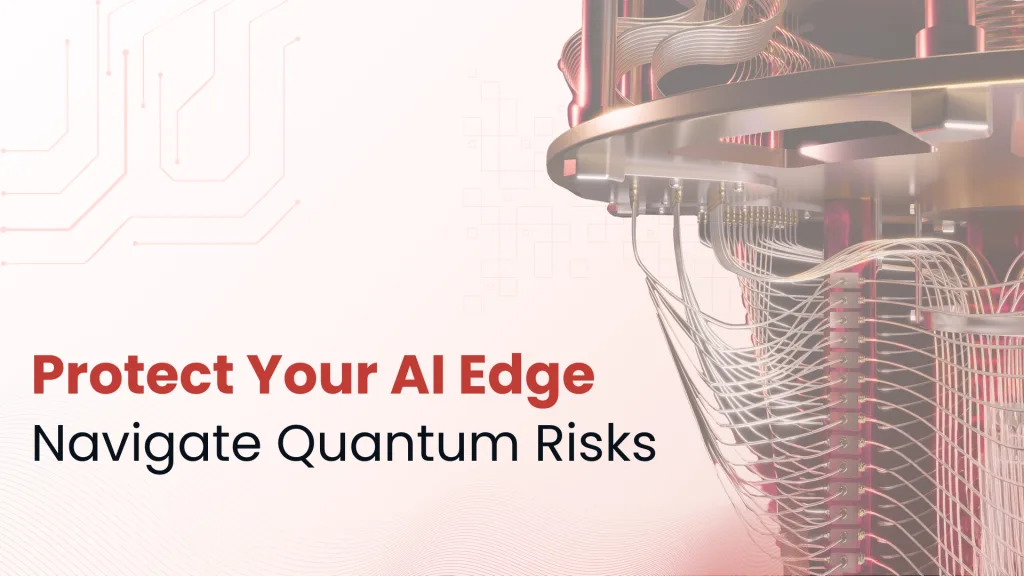
Quantum computing is a revolutionary approach to calculation that leverages the principles of quantum mechanics. It uses quantum bits, or “qubits,” to solve complex problems that are currently intractable for even the most powerful classical supercomputers.
As leaders in enterprise technology training, we’ve guided thousands of executives at Fortune 500 companies through the hype cycles of Web 3.0, Data Cloud, and Generative AI. We’ve seen firsthand how visionary leaders separate fleeting trends from foundational shifts. Today, we stand at the precipice of the next great technological disruption: quantum computing.
For years, quantum was the stuff of academic papers and research labs. But the landscape is changing with breathtaking speed. The United Nations has even declared 2025 the International Year of Quantum Science and Technology, signaling a global inflection point. This is no longer a conversation for physicists; it’s a critical strategic discussion for the boardroom.
Most articles on this topic either get lost in the complex physics or stay so high-level that they offer no real value. This post is different. We’re writing this for you—the C-suite executive, the business leader, the strategist. We will skip the jargon and focus on what you actually need to know to lead your organization into the quantum era. We’ll provide a clear-eyed view of the opportunities, the threats, and most importantly, a practical roadmap to prepare your business for what’s coming.
What is Quantum Computing (Explained for the Boardroom, Not the Lab)?
Before we discuss strategy, let’s demystify the technology in simple, business-focused terms. Forget the mind-bending physics for a moment. At its core, quantum computing is simply a new tool for solving certain types of problems—problems that are all about managing immense complexity.
Classical computers, from your laptop to the most powerful supercomputers, think in “bits.” A bit is like a light switch: it can be either ON (1) or OFF (0). This binary approach has served us incredibly well, but it has limits. When faced with problems with a staggering number of variables and potential outcomes—like optimizing a global supply chain or discovering a new life-saving molecule—classical computers can take millions of years to find the best answer. They have to check each possibility one by one.
Quantum computers work differently. They use qubits – for quantum bits.
Think of a qubit not as a light switch, but as a dimmer switch (like a speed controller for a ceiling fan) that can also spin. It can be ON, OFF, or a blend of both states simultaneously. This “both-at-once” state is called superposition. Furthermore, qubits can be linked together in a phenomenon called entanglement, where the state of one qubit is instantly connected to the state of another, no matter the distance between them.
What does this mean for business?
- Superposition allows a quantum computer to explore a vast number of possibilities simultaneously. Instead of checking every route for a delivery truck one by one, it can evaluate all routes at once to find the absolute best one.
- Entanglement creates complex relationships between qubits, allowing the computer to solve problems where many different parts are deeply interconnected, like balancing a multi-billion-dollar investment portfolio where every asset affects every other asset.
In essence, while classical computers solve problems sequentially, quantum computers solve them holistically. They are not here to replace your laptop or your data centres; they are specialized machines designed to tackle a specific class of problems that are currently impossible to solve. And those impossible problems are standing in the way of major breakthroughs in almost every industry.
The Quantum Tipping Point: Why 2025 is the Year to Pay Attention
For the past decade, the key question about quantum computing has been “if.” Now, the question is “when.” Several converging factors make 2025 the year that every executive must move quantum from their “watch list” to their “action list.”
Most experts agree that we are rapidly approaching the era of “quantum advantage,” where a quantum computer can solve a real-world business problem significantly faster, cheaper, or more accurately than a classical computer. While we may still be 5-10 years from widespread, fault-tolerant quantum machines, the strategic window to prepare for their impact is closing fast.
Here’s why the urgency has ramped up:
- Accelerating Technical Milestones: Companies like Google, IBM, and a host of ambitious startups are no longer just talking about theory. Google’s Sycamore processor, for example, demonstrated the ability to perform a specific calculation in minutes that would take a classical supercomputer thousands of years. While this “quantum supremacy” was a controlled experiment, it was a clear signal that the hardware is catching up to the theory.
- The Rise of Quantum Cloud Platforms: You no longer need to build a billion-dollar quantum computer in your basement. Cloud platforms like AWS Braket, Azure Quantum, and IBM Quantum Experience now offer access to real quantum hardware and simulators over the internet. This democratisation of access is allowing companies to experiment, learn, and develop algorithms without massive capital expenditure.
- A Surge in Public and Private Investment: Governments and venture capitalists are pouring billions into the quantum ecosystem. This flood of capital is accelerating research, fueling hardware development, and nurturing a new generation of quantum software and consulting startups. This isn’t speculative research funding; it’s a global race to build a new industrial base.
- The Shift from Research to Strategic Planning: A few years ago, only R&D departments were exploring quantum. Today, we see C-suite leaders and strategists actively engaging. A 2024 report by Gartner predicts that by 2028, 40% of large enterprises will have initiated quantum computing projects, up from less than 1% in 2022. Companies like JPMorgan Chase, Volkswagen, and Mercedes-Benz are already running pilot projects to explore quantum algorithms for their specific business challenges.
The early adopters are no longer just experimenting; they are building quantum-aware teams and developing strategic roadmaps. The competitive advantages they build in this preparatory phase—the talent they attract, the problems they identify, the partnerships they form—will be difficult for laggards to replicate.
Beyond the Hype: Three Tangible Ways Quantum Will Impact Your Business
The potential of quantum computing is vast, but for a business leader, it’s crucial to focus on the concrete applications that will drive value in the near to medium term. At DataCouch, we advise our clients to focus on three primary areas of impact.
Quantum-Powered Optimization: Revolutionizing Your Supply Chain and Financial Models
Optimization is at the heart of modern business. It’s about finding the best possible solution from a near-infinite number of options. This is precisely the kind of problem where quantum computers excel.
- For Logistics and Supply Chain: Consider the “traveling salesman problem”—finding the most efficient route for a vehicle making multiple stops. For a handful of stops, it’s easy. For thousands of packages across a national delivery network, it becomes a classically unsolvable problem. Companies often rely on “good enough” solutions. Quantum optimization algorithms, like the Quantum Approximate Optimization Algorithm (QAOA), promise to find the true optimal solution, leading to massive savings in fuel, time, and emissions. Volkswagen has already used a form of quantum computing to optimize bus routes in Lisbon and traffic flows in Beijing.
- For Finance: Financial institutions constantly perform complex risk analysis and portfolio optimization. A portfolio with thousands of assets has a near-infinite number of potential combinations and risk correlations. Quantum computers can analyze this complex landscape holistically to construct portfolios with higher returns for a given level of risk. According to a study from Accenture, quantum optimization could generate up to $5 billion in annual value for the banking and capital markets industry. JPMorgan Chase is actively exploring how quantum algorithms can improve its risk analysis and trade settlement strategies.
Why Your Current AI Strategy is Already Obsolete Without a Quantum Plan (Contrarian Angle)
This is perhaps the most critical point for any executive who has invested heavily in Artificial Intelligence. Your AI strategy is fundamentally incomplete without a quantum component. Quantum computing is not a competitor to AI; it is its ultimate accelerator.
Most leaders are focused on the power of Large Language Models (LLMs) and Generative AI. But the very machine learning models that underpin these technologies are hitting computational walls. Training sophisticated AI models requires immense computational power and time.
This is where Quantum Machine Learning (QML) comes in.
- Faster, More Powerful AI Training: QML algorithms have the potential to dramatically speed up the training process for complex AI models, allowing you to build more sophisticated and accurate systems in a fraction of the time.
- Solving Intractable AI Problems: Quantum computers can handle datasets with a level of complexity and dimensionality that would choke even the best classical systems. This could unlock breakthroughs in areas like drug discovery, where AI models need to simulate incredibly complex molecular interactions, a core focus of quantum simulation.
- A New Class of Optimization: Many AI applications are, at their core, optimization problems. Quantum computing can find better solutions for these problems, leading to smarter, more efficient AI across the board.
The key takeaway is this: quantum computing will protect and enhance your existing AI investments. The companies that learn how to blend classical AI with quantum capabilities will create a powerful, synergistic intelligence that leaves competitors behind. Thinking about AI without considering quantum is like planning a national railway system using only steam engine technology.
The Ticking Clock of Quantum Security: Is Your Data Safe?
This is not an opportunity; it’s an urgent and unavoidable threat. The very power that makes quantum computers great at optimization also makes them a profound threat to modern cybersecurity.
Most of the world’s secure data—from financial transactions and government secrets to your corporate IP—is protected by encryption algorithms like RSA. The strength of these algorithms relies on the fact that it is incredibly difficult for classical computers to factor large numbers.
A sufficiently powerful quantum computer, using what’s known as Shor’s Algorithm, could theoretically break this encryption in a matter of hours or days, not millennia.
This isn’t a future problem. It’s a “harvest now, decrypt later” problem. Adversaries could be capturing your encrypted data today, storing it, and waiting for the day a quantum computer is available to break the code.
The solution is Post-Quantum Cryptography (PQC). This is a new generation of encryption standards, currently being finalized by institutions like the U.S. National Institute of Standards and Technology (NIST), that are designed to be secure against attacks from both classical and quantum computers.
Every C-suite leader, especially the CIO and CISO, must ask: “What is our PQC transition plan?” Migrating an entire enterprise’s cryptographic infrastructure is a massive, multi-year undertaking. Waiting until the threat is imminent will be too late.
The Quantum-Ready Enterprise: A Strategic Roadmap for Leaders
Understanding the technology is the first step. The next step is taking action. Becoming a “quantum-ready” organization doesn’t mean you need to hire a team of quantum physicists tomorrow. It means building a strategic framework to navigate the coming changes.
Stop Focusing on Qubits, Start Focusing on Quantum-Ready Problems
One of the biggest mistakes we see leaders make is getting bogged down in the technical details of the hardware—how many qubits a machine has, its coherence times, etc. While important for scientists, this is the wrong focus for a business leader.
Your focus should be on identifying “quantum-ready” problems within your organization. These are the high-value, complex optimization, simulation, or machine learning problems that are currently costing you money or limiting your growth because they are too difficult for your classical computers to solve effectively.
Assemble a small, cross-functional team of business strategists and technical experts. Task them with creating an inventory of these problems. Ask questions like:
- Where are we currently relying on “good enough” approximations instead of optimal solutions?
- What new products or services could we create if we could simulate complex systems (e.g., new materials, chemical reactions, financial markets) with perfect accuracy?
- Which of our machine learning models are taking too long to train or are not as accurate as we need them to be?
This problem-first approach grounds your quantum strategy in tangible business value, not abstract technology.
Building Your Quantum-Aware Team: Talent, Training, and Partnerships
The biggest bottleneck to quantum adoption is not technology; it’s talent. There is a significant global shortage of people who understand both quantum computing and business strategy. You cannot wait to hire your way out of this problem. You must build your talent from within.
- Executive Education: The journey starts at the top. The leadership team must have a shared, foundational understanding of quantum’s strategic implications. This is why programs like our own Quantum Strategy for the AI-Driven Enterprise are essential—they are designed to translate quantum concepts into the language of business and strategy.
- Upskill Your “Bridge” Talent: Identify people in your organization who sit at the intersection of business and technology—data scientists, AI/ML engineers, IT strategists, and R&D leaders. These are your ideal candidates for deeper upskilling. They don’t need to become quantum physicists, but they need to learn enough to translate business problems into quantum workflows and to engage intelligently with quantum vendors and partners.
- Strategic Partnerships: For the foreseeable future, most companies will access quantum capabilities through partnerships. This could mean collaborating with major cloud providers (IBM, Google, AWS), working with specialized quantum software startups, or engaging with academic institutions and national labs.
A Phased Approach to Quantum Investment: From Exploration to Advantage
A quantum journey should be a marathon, not a sprint. We recommend a three-phased approach:
- Phase 1: Explore (12-18 months): The goal is education and identification. Invest in executive and technical training. Form your internal task force to identify quantum-ready problems. Begin low-cost experiments on cloud-based quantum simulators.
- Phase 2: Experiment (18-36 months): The goal is to build proof-of-concepts. Select one or two high-potential problems from your inventory and partner with a quantum vendor to develop a prototype solution. The aim here is not necessarily to achieve quantum advantage yet, but to build internal expertise and understand the practical challenges.
- Phase 3: Execute (3+ years): The goal is to achieve a real business advantage. By this stage, the hardware will be more mature, and your team will have the necessary skills. You can now begin to integrate quantum or quantum-inspired solutions into your production workflows to solve the problems you identified in Phase 1.
The Quantum Landscape: A Comparison of Strategic Approaches
Companies are not all approaching quantum in the same way. Understanding these different postures can help you define your own. We see three main archetypes emerging.
| Strategic Approach | Description | Who It's For | Example Activities |
|---|---|---|---|
| The Pioneer | Aims to be a leader in fundamental quantum research and development, often building their own hardware or core algorithms. | Large tech companies, governments, and heavily R&D-focused corporations (e.g., major pharma). | Building in-house quantum hardware labs; hiring teams of PhD physicists; publishing fundamental research. |
| The Explorer | Aims to be a "fast follower" by actively experimenting with existing quantum systems to solve specific business problems. | Most Fortune 500 companies, especially in finance, logistics, automotive, and aerospace.. | Partnering with cloud providers like IBM and AWS; running proof-of-concept projects; building a small, specialized internal quantum team. |
| The Watcher | Aims to be "quantum-aware" by monitoring the landscape and educating its workforce, but is not yet investing in active projects. | Small to medium-sized enterprises or companies in industries with less immediate impact. | Sending leaders to executive training programs; starting a PQC audit; encouraging technical staff to explore online resources. |
For most organizations in 2025, the Explorer strategy is the most prudent and value-driven approach. It balances prudent investment with active learning, positioning the company to move quickly once the technology reaches a critical maturity point.
Which Quantum Strategy is Best for You in 2025?
The quantum revolution is no longer a distant forecast; it is a present-day strategic reality. As leaders, our role is not to become quantum physicists but to be savvy architects of our organization’s future. The decisions you make in the next 12-24 months will determine whether your company is a leader in the quantum era or is left struggling to adapt to a world reshaped by it.
The path forward is clear:
- Educate: Start with yourself and your leadership team. Build a common language and a shared understanding of the strategic stakes.
- Investigate: Look inward to identify the complex, high-value problems that are holding your business back. This is where your quantum journey will find its purpose.
- Prepare: Begin the slow, steady work of building a quantum-aware culture, upskilling your key talent, and planning your migration to quantum-safe cryptography.
At DataCouch, we believe that the most complex technologies can be made simple and strategically actionable. Quantum computing is the next frontier. It represents an opportunity to solve some of humanity’s most challenging problems and to unlock unprecedented business value. The journey is just beginning, and we encourage you to take the first step today.
FAQs
- Will quantum computers replace our classical computers?
No, quantum computers are not replacements for everyday computers; they are specialized accelerators designed to solve specific, complex problems that are currently intractable for even the most powerful supercomputers. - How soon do we need to act on the quantum security threat?
The time to act is now, as adversaries can capture your encrypted data today and decrypt it later once a powerful quantum computer is available. Starting your transition to post-quantum cryptography (PQC) is an urgent priority. - Do we need to hire a team of quantum physicists to get started?
Not necessarily. The best first step is to upskill your existing technology and strategy leaders and form strategic partnerships with quantum experts and cloud providers to guide your initial exploration. - What is the most practical first step our company can take?
The most practical first step is to educate your leadership team on the strategic implications of quantum and then identify high-value business problems within your organization that are suitable for quantum solutions. - How does quantum computing affect our current AI investments?
Quantum computing is poised to be a major accelerator for AI, helping to train more complex models faster and solve optimization problems beyond the reach of classical AI systems, thereby enhancing your current AI strategy.
Tags:
- AI & Quantum Computing, AWS Braket, Azure Quantum, Business Strategy 2025, Business Transformation 2025, C-Suite Technology Guide, Emerging Technologies, Enterprise Technology Strategy, IBM Quantum, Post-Quantum Cryptography (PQC), Quantum Computing, Quantum Security, Quantum Strategy for Executives